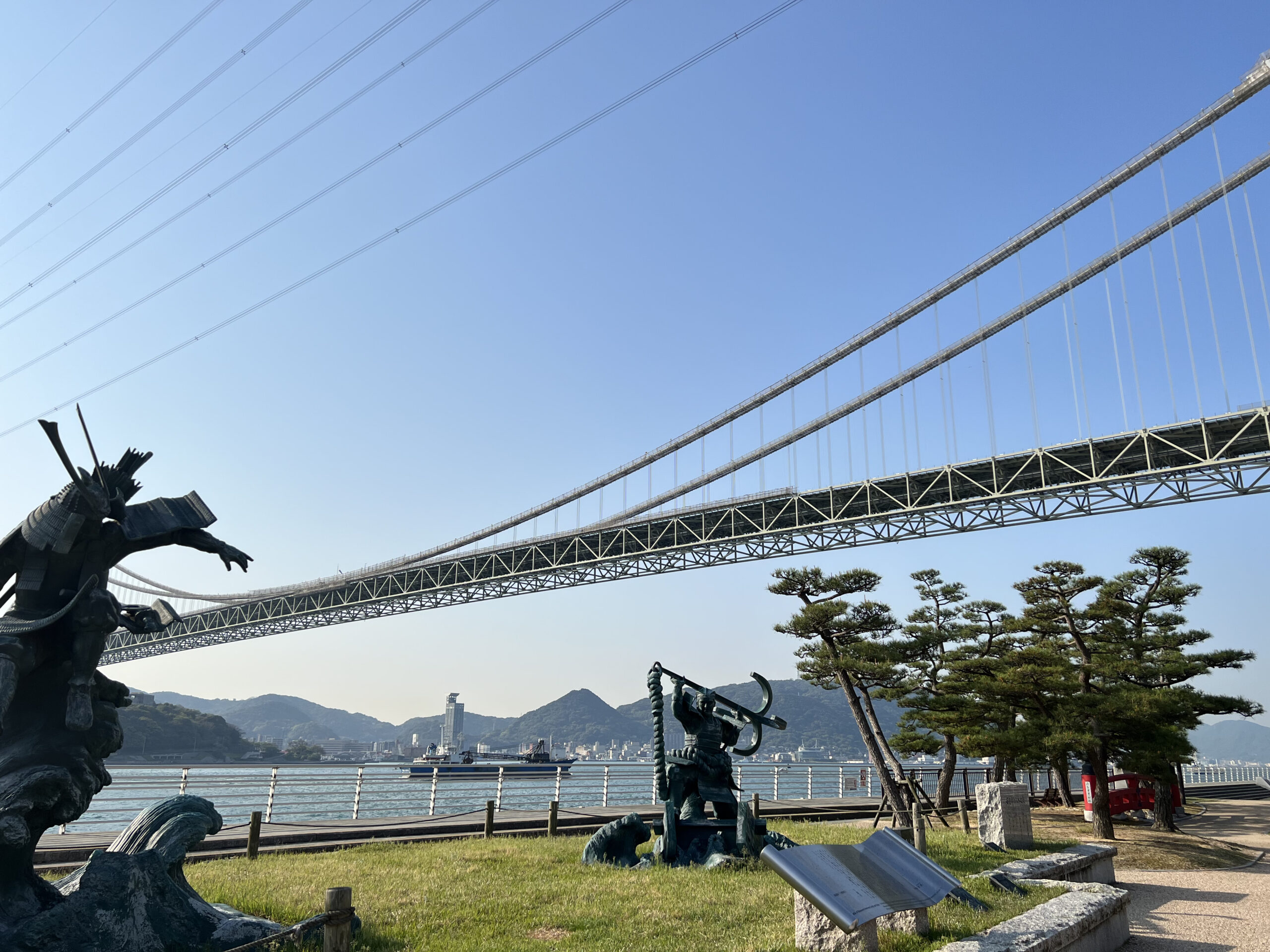
Long ago, this was named “ANATO”(穴門 hole-gate), and Shimonoseki on Honshu and Moji on Kyushu were connected by land, with water flowing underneath.
About 1,800 years ago, legend has it that when Empress Jingu(reigned 201-269 AD) set out to Sankan-Seibatsu (conquer the Three Kingdoms of Korea), the terrain changed and a strait was formed. However, in the 1970s, it was discovered that the strait was formed by a collapse that occurred 70 to 80 million years ago, when dinosaurs and other prehistoric creatures lived.
The Kanmon Straits have been the site of milestone events in Japanese history. It is the final battlefield of the Genpei War (The Heike Story), of the late 12th century. The battle marked the beginning of the samurai era, which lasted for about 700 years until the Meiji Restoration in the late 19th century.
Also, the Kanmon Straits used to serve as a gateway to the battlefield and an important economic route.
Since the time of Empress Jingu, the Strait has been a witness to battles and numerous lives.
Major Historical Events
The Korean War

1950-1953
After the Pacific War, the 24th Infantry Division, led by Major General William F. Dean, had been stationed in Kokura. Located close to South Korea, their unit was among the first sent to the Korean War. They suffered 3,602 dead and wounded and 2,962 captured. Including the commander, Major General William F. Dean, was captured. North Korea’s forces were extremely tough, and the UN forces struggled. Even if the casualties of fallen soldiers were temporarily buried in South Korea, they had to be exhumed again when the war situation changed. In this situation, Kokura was chosen as the location for transporting the casualties and disposing of them for return to their home countries. A large number of casualties were transported to Kokura. It was for this reason that the Korean War Memorial, “Memorial Cross,” was built in Kokura in 1951.
Links
- page: FOR THE BOYS — Kokura Memorial Cross
The Pacific War (WWII)
1940-1945
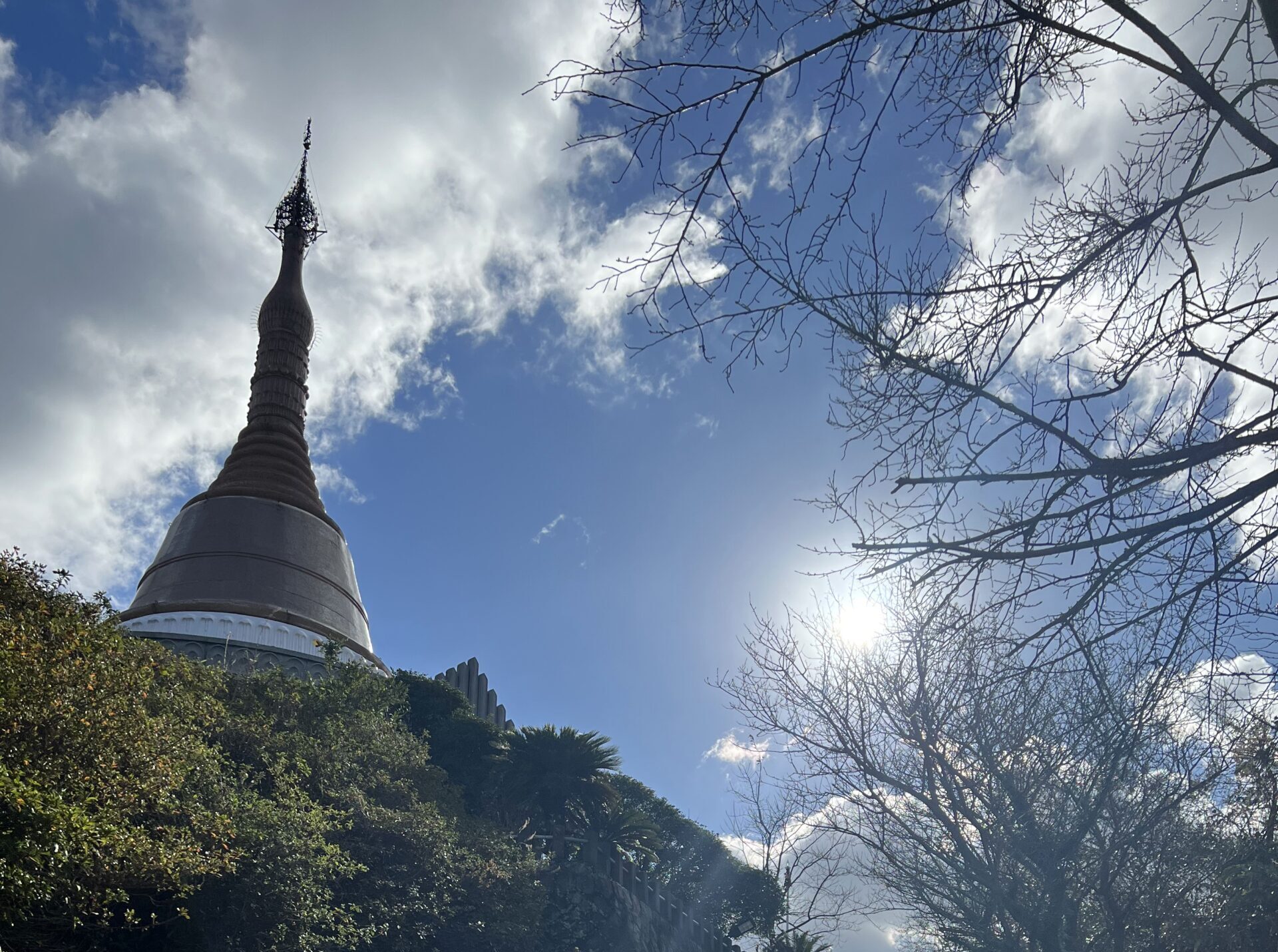
Kanmon was a gateway to the battlefield. Many Japanese soldiers never came back, and also many Allied POWs who were captured in the South Asia Battlefields were shipped and entered from Kanmon, and many of them couldn’t return to their country.
Links
From an external website
The luck of Kokura| Restricted Data – A Nuclear History Blog
–Shoko “Seina” Shiraishi — The War History of Kitakyushu-City
The Meiji Restoration
1868
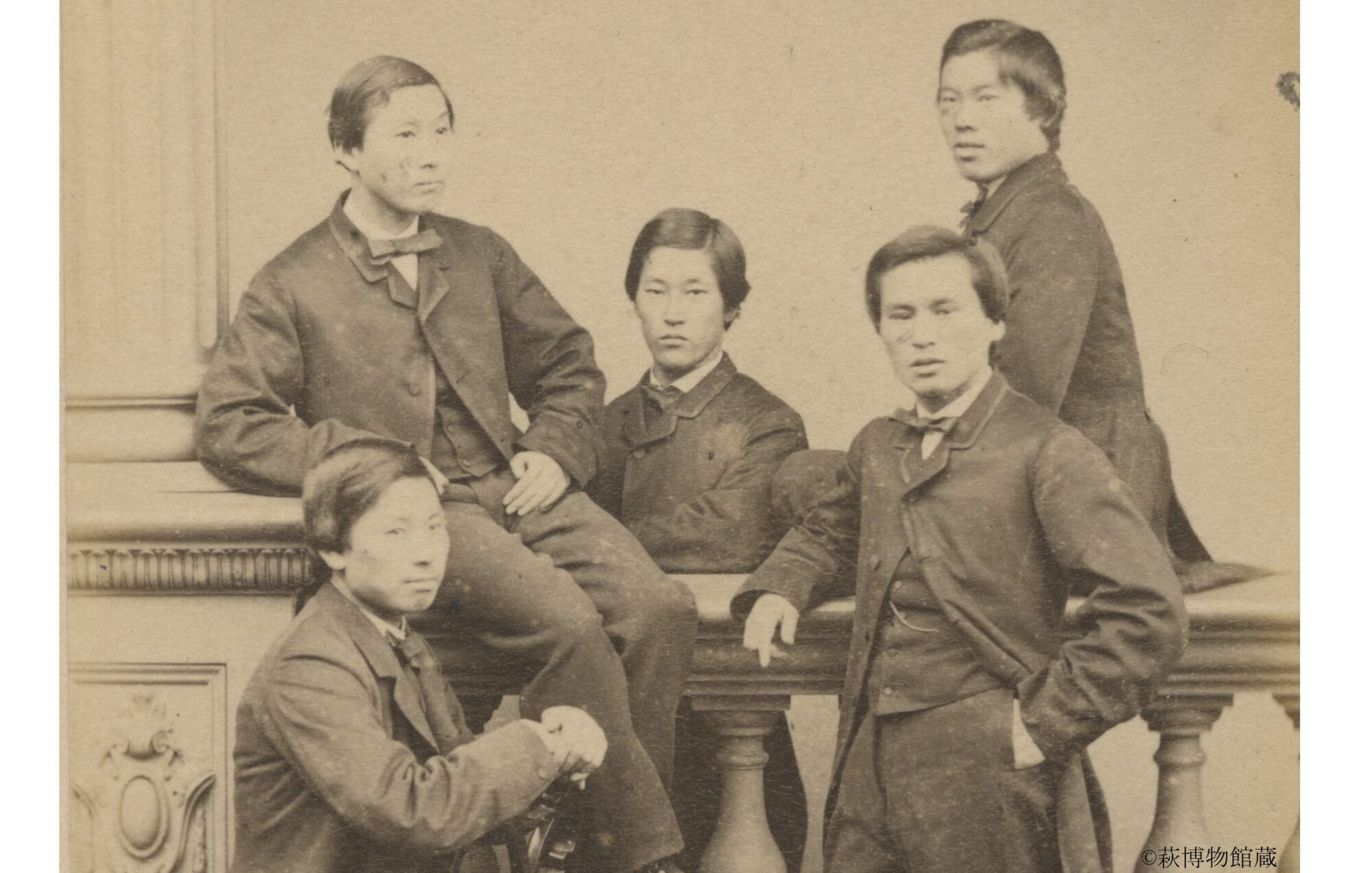
The Meiji Restoration was a revolution that brought an end to the samurai era, which had lasted for approximately 700 years, and opened Japan, which had been closed for about 300 years. After the Restoration, Japan entered several overseas wars. As I learned more about the history, Shimonoseki is one of the most important places of the Meiji Restoration, and the revolution was not led solely by the Japanese. History is always a mystery, and there is a constant stream of mysteries to be solved.
The Shimonoseki Campaign
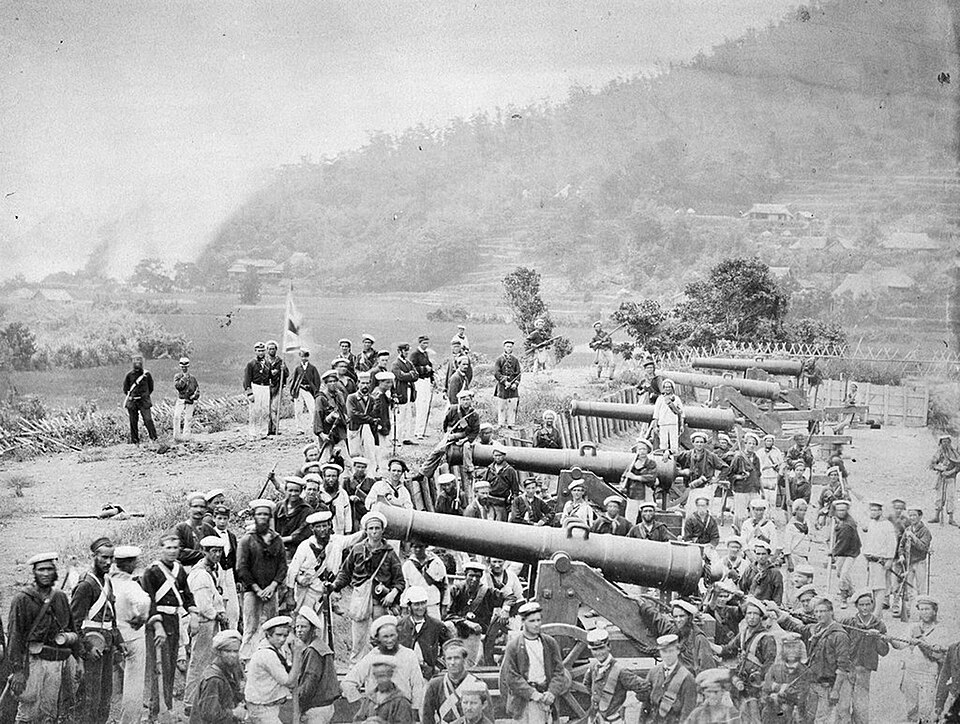
1863, 1864
The Shimonoseki Campaign was a series of military engagements in 1863 and 1864, fought to control the Shimonoseki Straits of Japan by joint naval forces from the United Kingdom, France, the Netherlands, and the United States, against the Japanese feudal domain of Chōshū, which took place off and on the coast of the Kanmon Straits.
The Battle of Ganryu Island
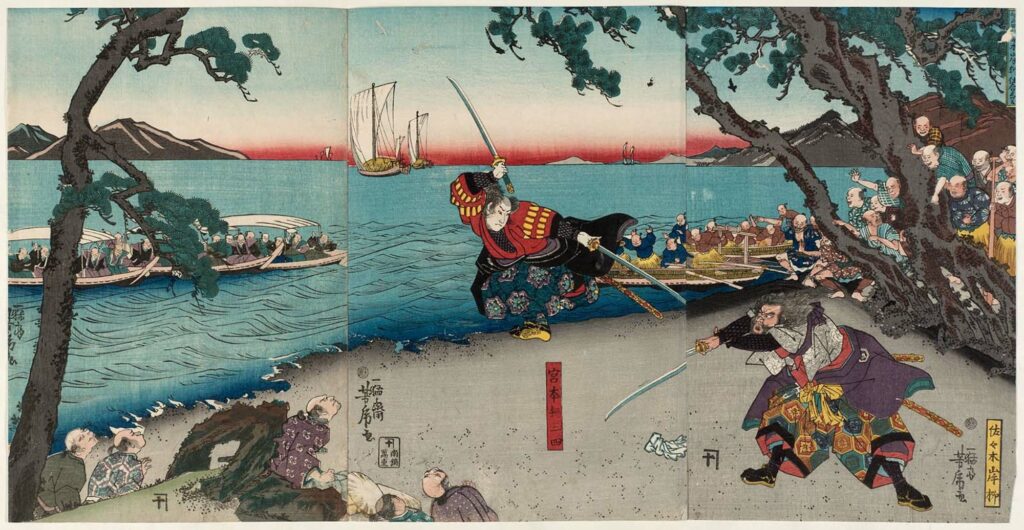
1612
Ganryujima is a small island in the Kanmon Strait. It was here that a duel between Miyamoto Musashi and Sasaki Kojiro took place in 1612. It is called The Battle of Ganryu-jim, and this is one of the most famous samurai duels.
In recent years, various theories have been told about this battle, and the true history remains unknown, but it’s the most legendary duel.
The Genpei War
(Battle of Dan-no-ura)
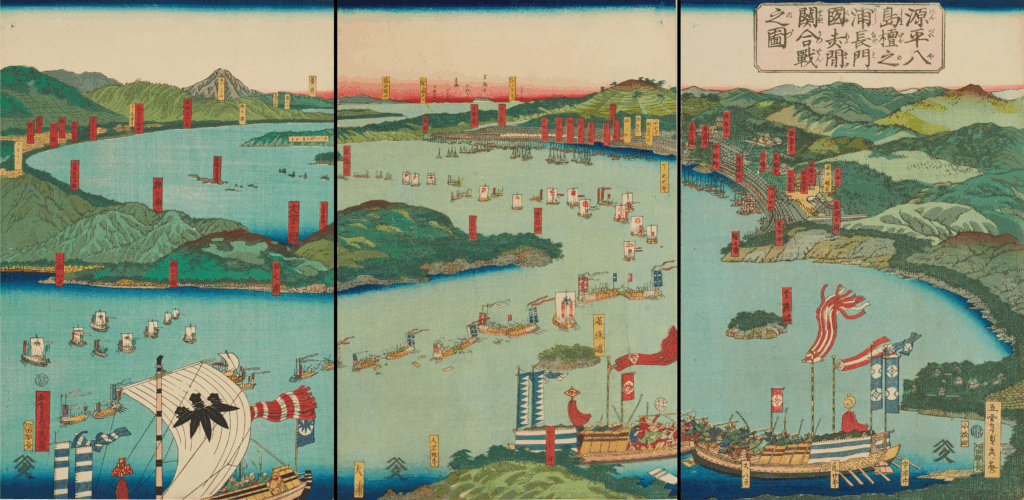
1185
The final battle of the Genpei War took place at Dannoura in the Kanmon Strait. The battle was the highlight of “The Heike Story”.
The Taira clan fought a decisive battle at Dannoura against the Genji led by Minamoto no Yoshitsune, but was defeated. Eight-year-old Emperor Antoku drowned in his grandmother’s arms. Other Taira clan members drowned or were captured, marking the end of the Taira clan.
This battle marked the beginning of a 700-year period in which samurai dominated politics. This battle is one of the most important events in Japanese history.
“The Heike Story”
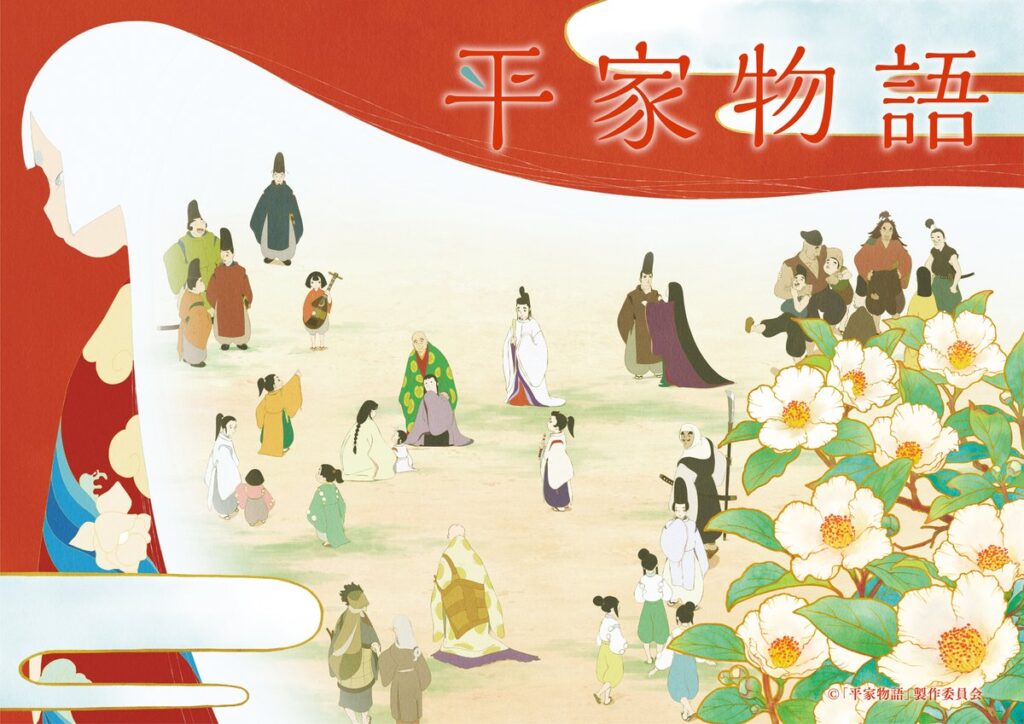
” The Heike Story” is a significant historical tale in Japanese history.
Most Japanese students study “The Heike Story” in high school and memorize the first phrase. It is like American children memorise “I Have a Dream” by Martin Luther King.
If you plan to visit Kyoto, Kobe, and Miyajima (near Hiroshima), knowing “The Heike Story” will deepen your trip.
Sankan-seibatsu
The 3rd Century
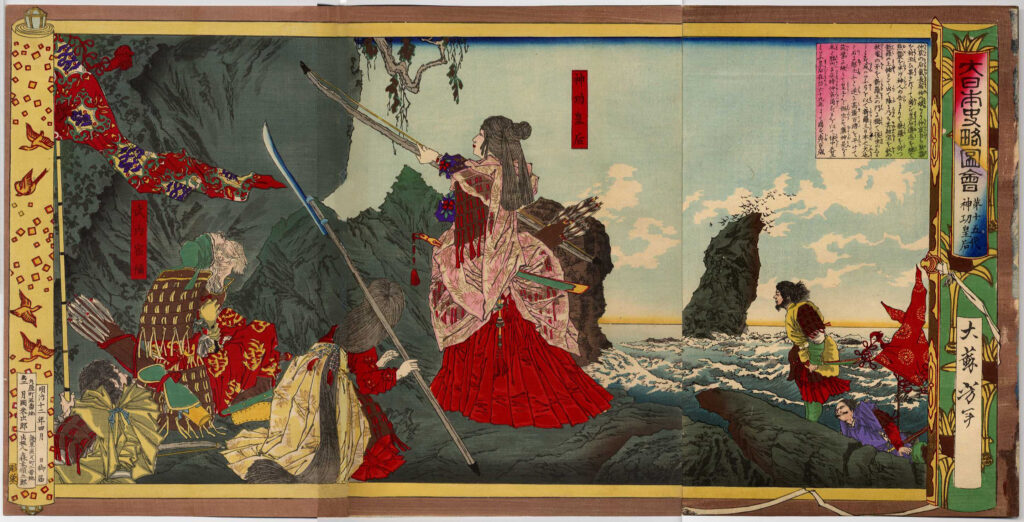
In the 3rd century, Empress Jingu invaded the three Korean states (Silla, Baekje, and Goguryeo). However, she received an oracle and was given two orbs, “Manju” and “Kanju,” which control the tides. With these orbs, Empress Jingu conquered the three Korean countries without fighting.
Legend has it that after the Empress Jingu returned, these two balls became two islands, “Manju” and “Kanju”. Two islands are located in the Kanmon Straits.
“Feel” the History
Some people say, “The Victors write History.” And victims tell their story.
Each person is in a different position and has a different culture, religion, generation, and historical background.
Even if they are of the same race or nationality, no two people are the same.
To “Feel the History” is through each person’s own experiences and filters, which may be one way of getting to know the history, and then you will find “History” through your eyes.