
KANMON has two histories that has been almost forgotten.
You may tell them, “I Remember You”
“FOR THE BOYS” is a film starring Bette Midler as a singer to entertain American troops during WWII, the Korean War, and the Vietnam War.
Kokura Memorial Cross
The Korean War Memorial
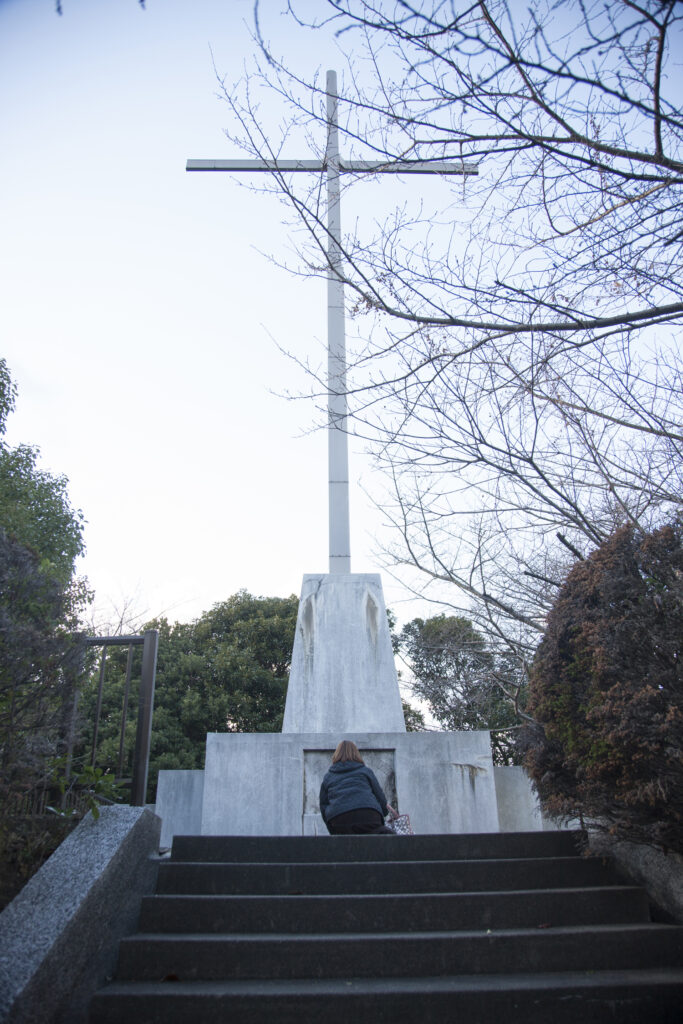
After the Pacific War, the 24th Infantry Division, commanded by Major General William F. Dean, was stationed in Kokura. Due to Kokura’s proximity to South Korea, this unit Division was among the first sent to the Korean War (the first sent regiment ). The division suffered 3,602 dead and wounded, and 2,962 captured, including its commander, Major General Dean.
North Korean forces proved extremely tough, and the UN forces faced significant challenges. Fallen soldiers who were temporarily buried in South Korea often had to be exhumed when the situation changed. Consequently, Kokura was chosen as the location for transporting these casualties for processing and returning them to their home countries. This led to a large number of casualties passing through Kokura, prompting the construction of the Korean War Memorial, the “Memorial Cross,” in 1951.
Links
- “8204th Army Unit” (American Graves Registration Service Group) / Army Historical Foundation
- “Graves Registration in the Korean Conflict” / Army QuatreMaster Foundation
- The 24th Infantry Division Association
Access Infomation
Taking a taxi is recommended. Please ask the driver to wait while you are visiting. You will not be able to catch a cab at the spot.
- From Kokura Station: about 2.5miles (4km)
- From Kokura Castle: about 3miles (4.8km)
Please show this to the taxi driver
Allied POWs of The Pacific War
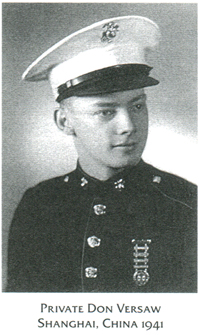
During the Pacific War, Allied prisoners of war (POWs) who were captured in the South Asian Battlefields were shipped and entered from Kanmon.
I met Mr. Donald Versaw in 1999 through my U.S. project. He recounted being captured in the Philippines and sent to Moji Port as a prisoner of war (POW) during the Pacific War.
The history of POWs in Japan is not well known. Moji Port was a major transportation hub at the time. Many POWs entered Japan through Moji. I promised Mr. Versaw that I would build a memorial for soldiers who could not return home, but I was unable to fulfill that promise.
I believed that nothing related to Allied POWs remained in the Kanmon area. However, during a visit to Ganryu-jima in 2025, I discovered the remains of the quarantine station where arriving POWs were processed. These ruins are visible from the tip of Ganryu-jima.
Links
- Last surviving China Band Marine relives experiences (The Official Website of The U.S. Marines Corps)
- Shoko “Seina” Shiraishi — The War History of Kitakyushu-City
Moji Port and Allied POWs
(POW Research Network Japan – Taeko Sasamoto)
During World War II, the Japanese military captured approximately 130,000 Allied soldiers (American, British, Dutch, Australian, Canadian, Indian, New Zealand, etc.) across the Asia-Pacific as prisoners of war. More than 30,000 were sent to Japan by ship to fill the domestic labor shortage. Nearly 70 POW transport vessels of all sizes arrived in Japan, and most entered Moji Port. POWs were sent by train from Mojiko Station or Shimonoseki Station on the opposite shore to various parts of Japan, where they were employed in coal mines, mines, shipyards, factories, and other locations.
Prisoners who arrived at Moji Port on the “Hell Ship”
The ship that carried the prisoners was also called the “Hell ship.” Because it was a very tragic voyage. The POWs were crammed into the dark bottom of the ship, with little food or water, and the unsanitary environment with no toilets led to the spread of infectious diseases such as dysentery, and many died. In addition, the ship was sunk by Allied torpedo attacks and bombings, resulting in numerous casualties. It is said that more than 10,000 POWs died during the voyage.
The POWs who barely made it to Moji were on the verge of physical and mental weakness, and many died on board the ship just before landing. A person who witnessed the incident gave the following testimony.
Along the quay, coffins spilling out from the warehouse were stacked two or three high in long rows. Some lids wouldn’t close properly, and hands protruded from the coffins. It was an eerie sight. The prisoners who had come ashore staggered to their feet, their faces deathly pale. Those prisoners, looking as if they might die at any moment, were lined up in columns and led away somewhere by Japanese soldiers.
Those who died immediately after entering Moji Port were cremated on the beach or at the municipal crematorium in Maruyama Town. Those who could manage to walk were sent to camps across Japan, but seriously ill patients were housed at Kokura Army Hospital, Shimonoseki Quarantine Station, Moji Camp, and other locations.
Moji concentration camp
This camp was opened on November 27, 1945, using the YMCA building in Kusunoki-cho, Moji City (currently Oimatsu-cho, Moji Ward). The name changed depending on the period, but the last official name was “Fukuoka POW Camp No. 4 Branch Camp.”
Approximately 300 prisoners of war, including British, American, and Dutch nationals, were “settled” here, and they were mainly forced to work as cargo workers on ships docked at Moji Port and in warehouses around Sotohama Station. A British former POW who spent about two and a half years in Moji said that although he suffered from harsh labor, hunger, and violence from the guards, some Japanese were kind.
In addition to them, we temporarily housed seriously ill patients from POW transport ships that entered Moji Port, and many of the deaths occurred from here. By the end of the war, a total of 191 people had died in this camp, but if you include the 93 people who died on the transport ship just before landing, the total number would be 284 (303 according to other sources). Their remains were first stored in a camp and later moved to the Hongan-ji temple, but as this temple burned down, they were buried in the mass grave of Daio-ji Temple in Shoji-cho in May 1945. After the end of the war, these remains were recovered by the Occupation Forces and interred together in the columbarium of the British Commonwealth War Cemetery in Yokohama.

The remains of the quarantine station for Allied POWs
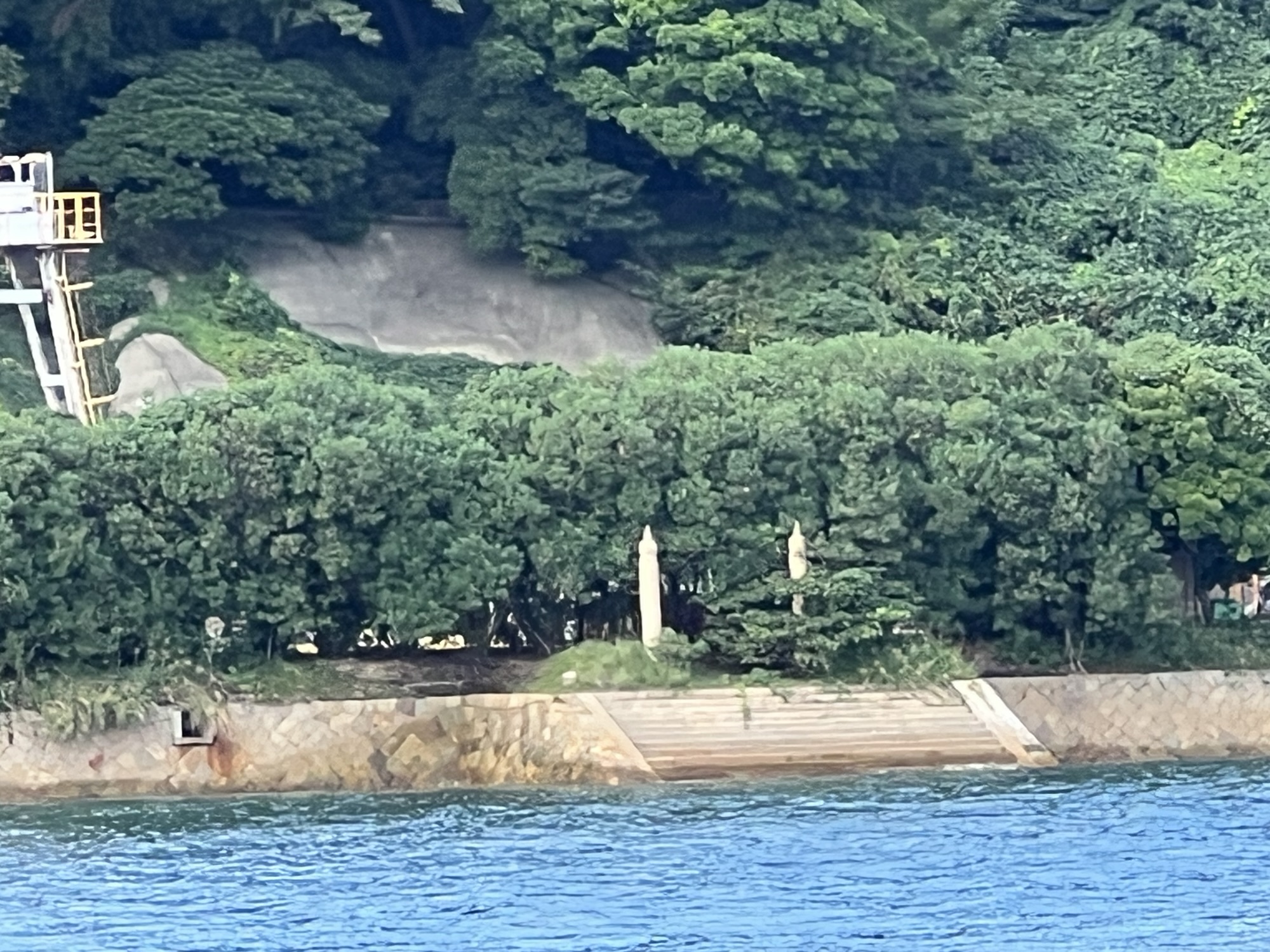
At the end of November 1945, four “hell ships” arrived simultaneously. Approximately 60 patients with infectious diseases, including dysentery, were placed in the isolation ward of the Shimonoseki Quarantine Station in Enoura-cho, Hikoshima, Shimonoseki City, located opposite Moji. This facility served as a branch of the Moji camp, though its operational period is unclear. Residents recall that POWs, after a period of relative calm, were transferred to a second camp near Hikoshima Enoura-cho 2-chome, but further details are unknown.
Access Infomation
Take the Ganryujima Ferry from Karato Pier in Shimonoseki or Marine Gate Moji in Mojiko. Once on the island, walk to its tip to view the remains of the former POW quarantine station on Hikoshima (Shimonoseki), located next to the Mitsubishi Shipyard.
Ganryujima is a small island in the Kanmon Strait. In 1612, it was the site of a famous duel between Miyamoto Musashi and Sasaki Kojiro, known as the Battle of Ganryu-jima, one of the most well-known samurai duels.
NEVER FORGOTTEN
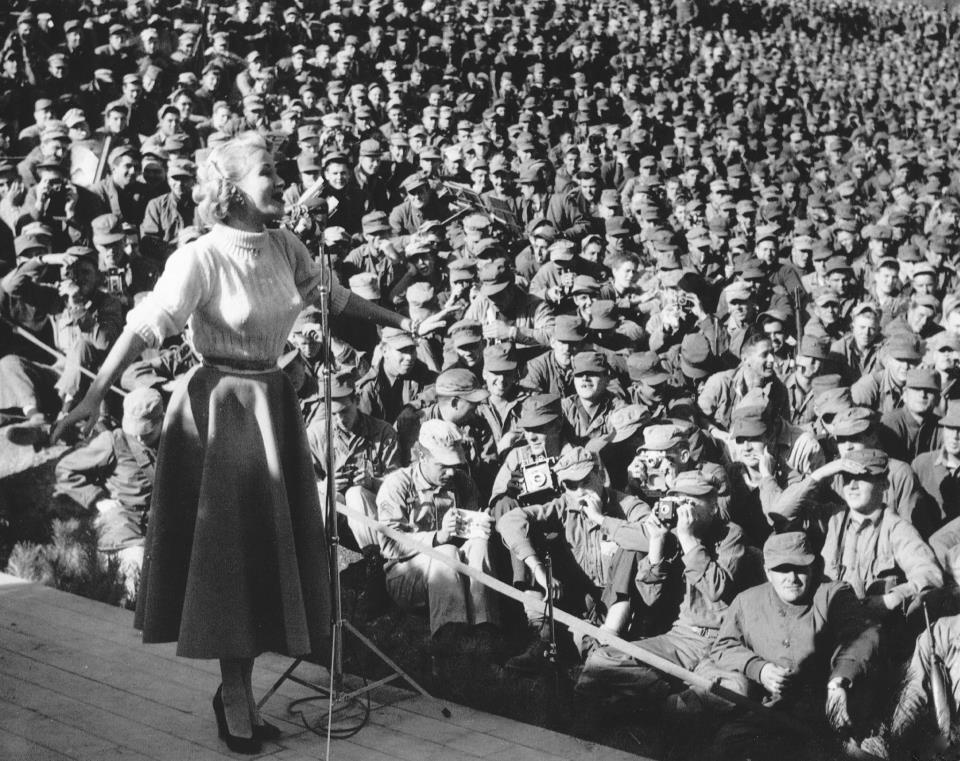
In 1951, my friend Ms. Monica Lewis (1922-2015) entertained “for the boys” who served in the Korean War with Danny Kaye.
Korean War Poem
by LCDR Roberto J. Prinselaar, USCG (Ret)
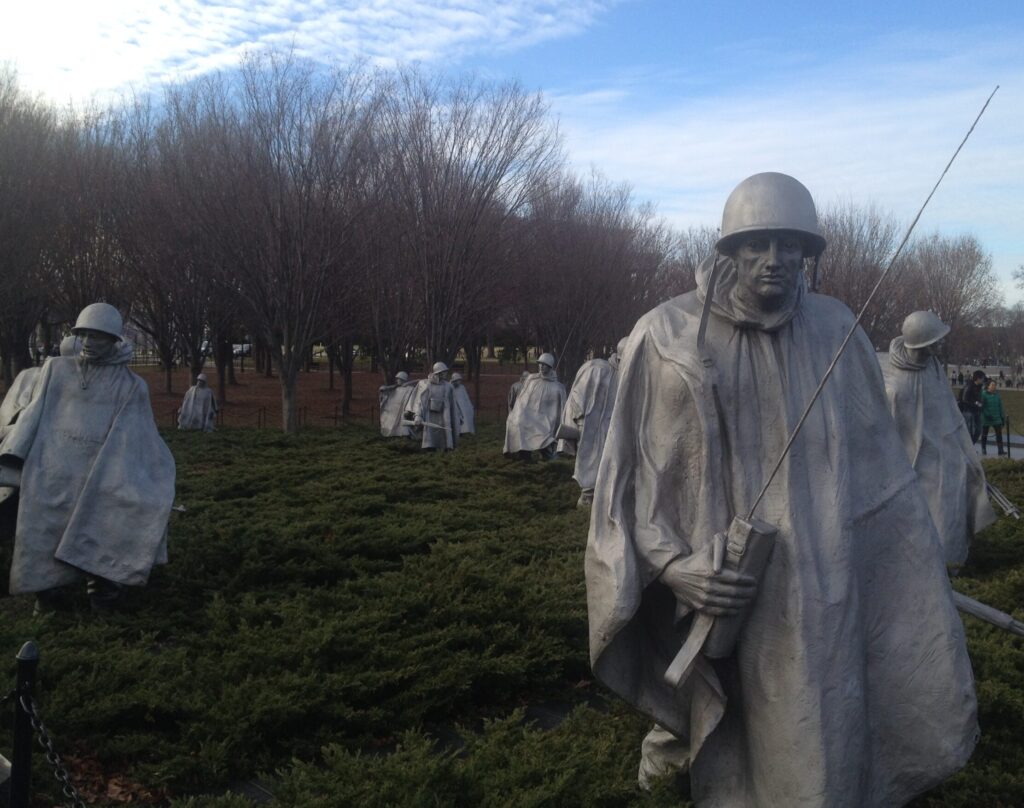
The poem is etched in stone at a Korean War Veteran’s Memorial in the Liberty State Park NJ Turnpike, Exit 14-B Jersey City, NJ
We didn’t do much talking,
We didn’t raise a fuss.
But Korea really happened
So please – remember us.
We all just did our duty
But we didn’t win or lose.
A victory was denied us
But we didn’t get to choose.
We all roasted in the summer
In winter, we damn near froze.
Walking back from near the Yalu
With our blackened frozen toes.
Like the surf the Chinese kept coming
With their bugles in the night.
We fired into their masses
Praying for the morning light.
All of us just had to be there
And so many of us died.
But now we’re all but half forgotten
No one remembers how we tried.
We grow fewer with the years now
And we still don’t raise a fuss.
But Korea really happened
So please – remember us.
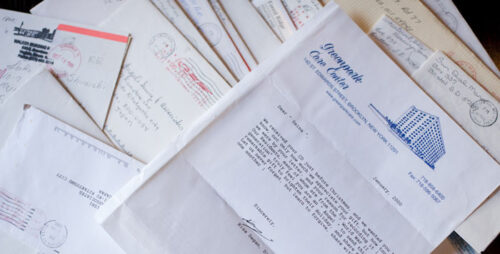
Dear Seina
We received your CD just before Christmas, and we wanted you to know, not only how much we appreciate your gift, but how touched we were by your letter and your reason for recording it!
Our Residents, many of whom are from the “World War II generation,” truly feel you are an “Angel” to send this remarkable gift to brighten their Holiday, and share memories.
Let us never forget, but learn to forgive, share with, and love one another!
Sincerely,
Risa Segan, Director of Activities
GREENPARK CARE CENTER, NYz
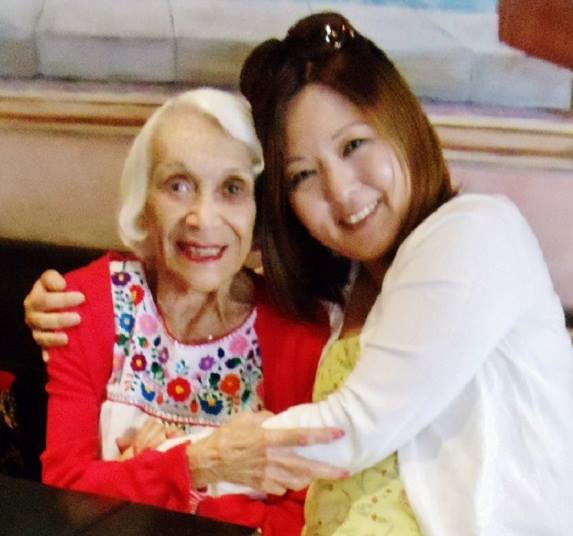
MUSIC WITHOUT BORDERS: A lovely Japanese jazz vocalist who has friended me through this page, Shoko “Seina” Shiraishi, has brought to my attention a Korean War memorial in her town of Kokura.
Thanks For the Memory
Thank you so much♪
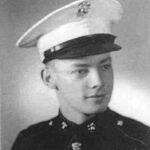
Donald L. Versaw
1921 – 2014
The Pacific War & Korean War Veteran, ex-POW
“I tell you, the first few strains of the first number in your CD nearly brought this old man to tears. Seina, my dear, I can’t thank you enough. You have brought a lot of happiness to me today and for tomorrow – lots of tomorrows.”

Monica Lewis
1922 – 2015
actress, jazz vocalist
“Seina’s love for mid-century music, and for those who grew up in that era, comes through loud and clear! Keep singing, and thank you for your contributions to memorializing all of those who sacrificed during the Korean War.”
The 24th Infantry Division Association
I received the email below from Shoko Seina Shiraishi on Nov 27, 2012, and want to help her try to get answers to her questions about the Memorial Cross in Kokura. Her email letter follows:
“Hello from Kokura, Fukuoka, JAPAN”
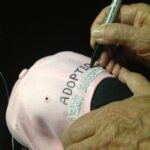
David Valley
ex-General MacArthur Honor Guard
When I asked about the Kokura Memorial Cross to the 24th Infantry Division, Mr.Valley contacted me. I visited the MacArthur Memorial in Norfolk, VA, and then I visited San Diego to see him. He bought me “ARMY DAUGTER” cap and added “ADOPTED”.