Yesterday, I visited The Moji World Peace Pagoda, which I wrote about a little bit the other day. My last visit was two years ago.
The pagoda was built through the efforts and dedication of those who survived the Burma Campaign, their bereaved families, the then Mayor of Moji City, and cooperation with the Burmese government.
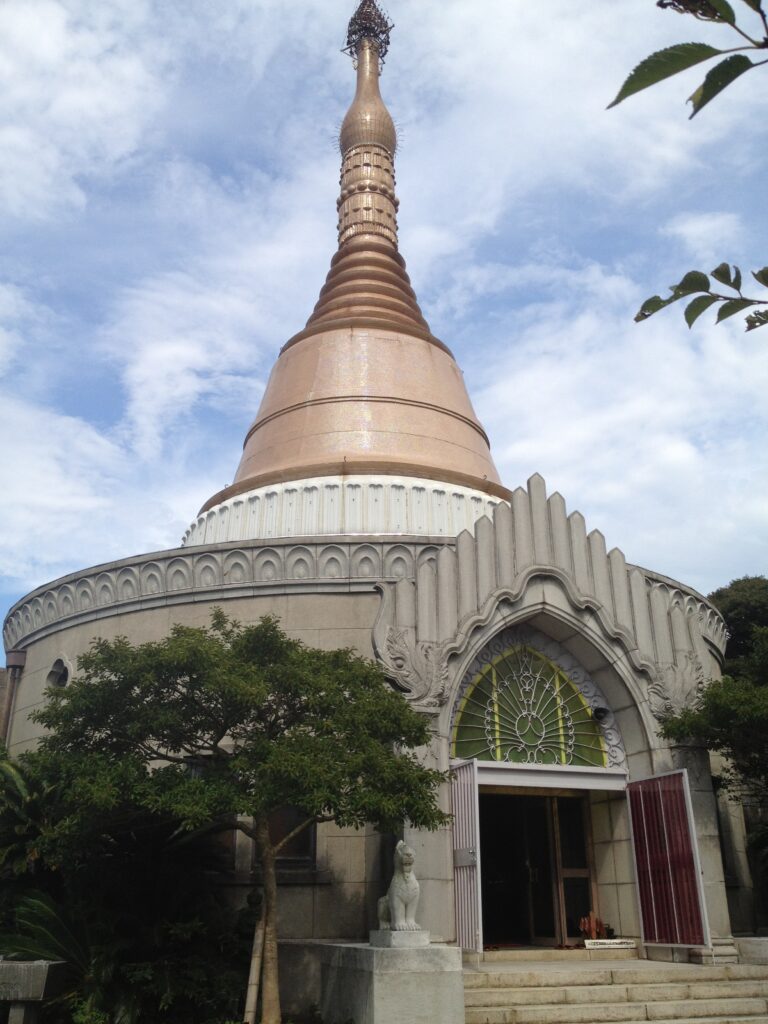
But in 2012, many of the people who survived the Burma Campaign and their bereaved families passed, so it was closed.However, that year, through the efforts of the chairman of the local company Sunray, it was possible to reopen. Yet he passed away in September 2024, and those who had been cooperating at the time had grown elderly, while the times and circumstances had changed.
Yesterday, whilst walking around the temple grounds, thoughts of the Thai-Burma Railway came to mind.
Come to think of it, those involved in activities for former Allied prisoners of war mentioned that many people perished whilst being forced to labour on the Thai-Burma Railway.
I searched for the Thai-Burma Railway on my iPhone. I learnt it is known in English as the Death Railway. Japanese Wiki says;
The construction workforce comprised 12,000 Japanese soldiers, 62,000 Allied prisoners of war (of whom 12,621 died: 6,904 British, 2,802 Australians, 2,782 Dutch, and 133 Americans), alongside tens of thousands of Thai labourers known as ‘Rohingya’ (exact numbers unknown), recruited or forcibly conscripted, 180,000 Burmese (40,000 of whom died), 80,000 Malaysians (including Chinese and Indians, 42,000 of whom died), and 45,000 Indonesians (including Chinese immigrants) were conscripted into labour.
Here is the English Wiki.
I, we, don’t know much about history. Even if we did, we could only know a part of it.
Walking through the temple grounds, I became aware of one such part of history.

Yesterday, February 4th, was Risshun, the beginning of spring, which marks the start of the new year in the old calendar.
Until recent years, I didn’t even know the meaning of the old calendar. It seems the old calendar was linked to the movements of the moon. In 1868, during the Meiji era, Japan switched from the old calendar to the Gregorian calendar.
I, and many of our generation and younger, didn’t know such things either.
A new year has begun.